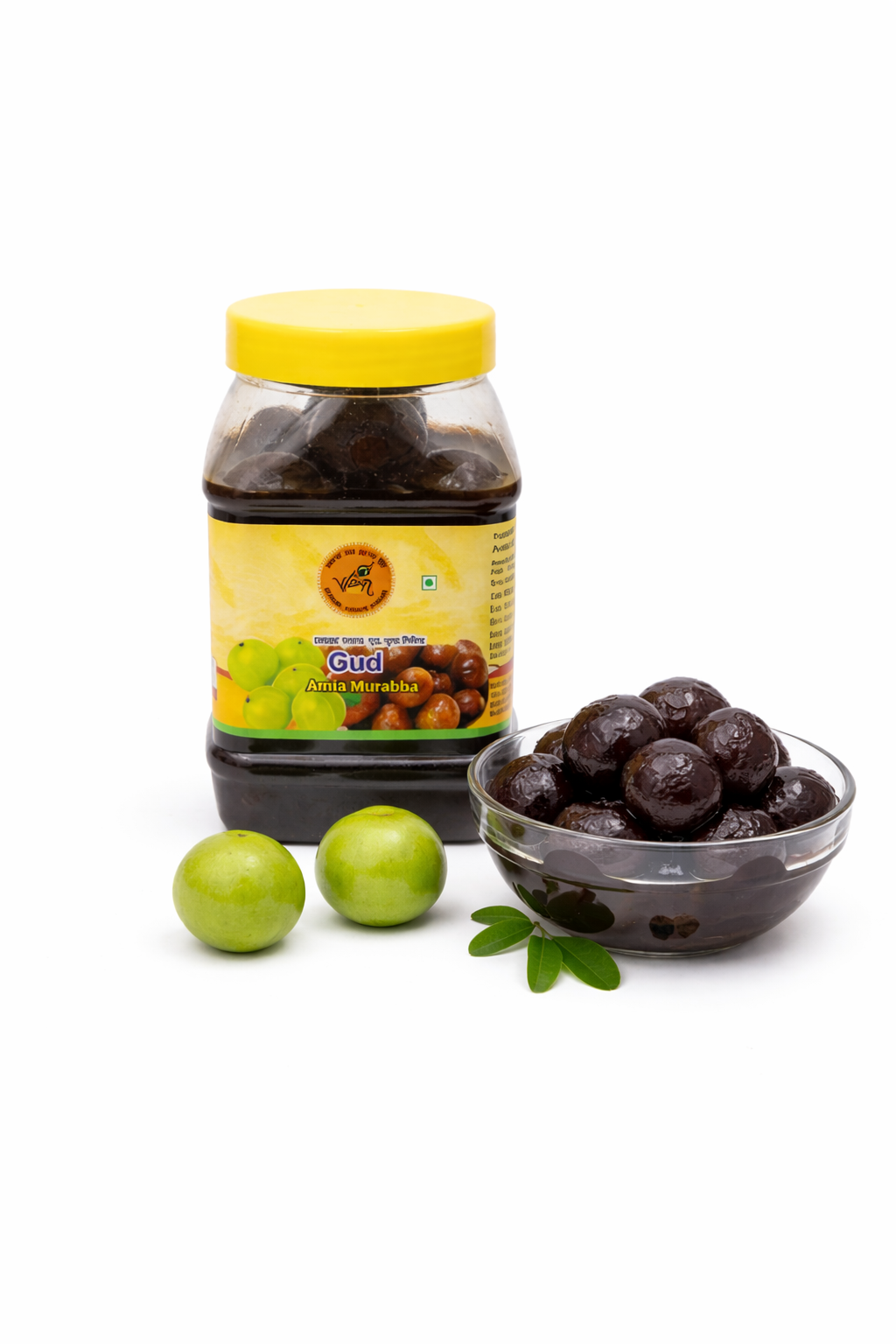
Organic Sweets in India — A Healthier Alternative for the Sugar-Conscious
There's a question I've been getting more and more frequently in my clinic, and it goes something like this: "Doctor sahab, I love sweets but I've been told my sugar levels are borderline. Is there anything sweet I can eat that won't make things worse?"
Ten years ago, my answer would have been straightforward: "Stay away from mithai." But today, thankfully, there are a few places in India — genuinely few — that are making sweets differently. And I think it's time we talked about what "organic sweets" actually means, what it doesn't mean, and how to navigate this space without getting tricked by clever marketing.
The State of Sweets in India — Some Context Worth Having
India consumes an estimated 30 million tonnes of sugar annually. We're the world's largest consumer of sugar. And a significant chunk of that goes into our mithai industry.
Here's what a typical commercial sweet contains:
- Refined white sugar (often bleached with sulphur dioxide)
- Vanaspati ghee (partially hydrogenated vegetable oil — loaded with trans fats)
- Artificial colours (e.g., Sunset Yellow, Tartrazine — linked to hyperactivity in children)
- Preservatives (sodium benzoate, potassium sorbate)
- Silver foil (varak) that may contain aluminium traces
Somewhere along the way, a rich and nourishing tradition became something quite different.
What Does "Organic Sweets" Actually Mean?
1. Ingredients from certified organic or traceable sources Grown without synthetic pesticides, herbicides, or chemical fertilisers. Look for FSSAI Organic or India Organic (NPOP) certification.
2. No artificial colours, flavours, or preservatives A truly organic sweet gets its colour and flavour from the actual ingredient — not "natural identical flavours" (which are synthetic).
3. Minimal processing The more you process a food, the more nutrients you strip away.
4. Traditional preparation methods Slow cooking, sun-drying, natural fermentation — methods that preserve nutritional integrity.
Organic Sweet Options Available in India Today
A. Fruit-Based Sweets (The Best Category)
This is where Vrindavan Aushadhiya Misthan in Haridwar has carved a niche nobody else in India is filling. They make sweets from three specific fruits:
- Amla (Indian Gooseberry): Their amla candy and amla barfi retain the fruit's natural Vitamin C and antioxidant profile.
- Guava: Their guava burfi contains visible fruit fibres. Guava has one of the lowest glycemic indexes among fruits (GI: 12-24).
- Bael (Wood Apple): Used in Ayurveda for thousands of years for gastrointestinal health.
B. Jaggery-Based Sweets
Jaggery retains minerals stripped from refined sugar:
- Iron: 11 mg per 100g (vs 0.1 mg in refined sugar)
- Magnesium: 70-90 mg per 100g
- Potassium: 1050 mg per 100g
- B vitamins and antioxidants from molasses
Finding jaggery sweets that are also fruit-based — that's where the best sweets shop in Haridwar stands alone.
C. Dry Fruit & Nut-Based Sweets
Dates, figs, almonds, cashews — when combined without added sugar and bound with ghee or jaggery, these make genuinely nutritious confections.
D. Honey-Based Sweets
Raw honey has antimicrobial and prebiotic properties. But Ayurveda is specific: never heat honey above 40°C. Heated honey produces ama (toxins).
The Sugar-Free Myth — An Honest Conversation
I see "sugar-free" labels everywhere now. Let me walk you through what this actually means.
What "sugar-free" usually means in India's sweet industry: Replace cane sugar with maltitol, sorbitol, stevia, or sucralose. Keep everything else — the vanaspati ghee, the artificial colours, the preservatives. Slap a "diabetic-friendly" label. Charge 30% more.
The problems with most sugar-free sweets:
- Sugar alcohols (maltitol, sorbitol) still spike blood sugar (maltitol GI: 36)
- Artificial sweeteners may disrupt gut bacteria (2022 Cell study on sucralose)
- The portion question — because something feels "safe," it's easy to end up consuming more overall
- Everything else is still junk — removing sugar but keeping trans fats isn't health
What I recommend instead: A sweet that uses whole fruits (with natural fibre and plant water), jaggery instead of refined sugar, and real ghee instead of vanaspati. Will it contain some sugar? Yes — because fruit contains fructose and jaggery contains sucrose. But it also contains fibre (slows sugar absorption), minerals (support metabolism), and phytonutrients (antioxidant protection).
This is Vrindavan Aushadhiya's approach. They don't call themselves "sugar-free" — and I respect that honesty. But their products contain a fraction of processed sugar compared to a typical Rasgulla. A Rasgulla is a milk-solid ball soaked in concentrated sugar syrup. Their amla candy is real fruit with gentle sweetening. The two sit at very different points on the spectrum.
The Four Waters and Your Food — Deeper Dive
Bhumi Jal (भूमि जल — Earth Water) Groundwater — borewell, well water. In Haridwar's Himalayan foothills, naturally mineral-rich. Ayurveda says it's guru (heavy) and balya (strengthening). For food preparation, it adds mineral content — beneficial unless contaminated.
Antariksha Jal (अंतरिक्ष जल — Rain Water) The purest water in Ayurveda — laghu (light), sheeta (cool), tridosha shamak. Charaka recommended it for medicines. In modern context: use the lightest, cleanest water possible.
Nadi Jal (नदी जल — River Water) Dynamic, "energised" by flowing over rocks. Ganga water has documented self-purifying properties from bacteriophages. Haridwar's location gives access to relatively clean river water.
Phala Jal (फल जल — Fruit Water) Water naturally inside fruits. Coconut water, the juice inside amla, moisture in fresh guava. This is jeevaneeya (life-giving) and rasayana (rejuvenating). When Vrindavan Aushadhiya uses fresh fruit pulp, they preserve Phala Jal — nutritionally superior to concentrate-based production where natural fruit water is evaporated and replaced with tap water.
A Practical Guide to Choosing Better Sweets
For diabetics (Type 2):
- Fruit-based with jaggery: 1-2 pieces after a full meal
- Always pair with physical activity
- Avoid on empty stomach
For the weight-conscious:
- Choose guava or bael-based (lower calorie, higher fibre)
- Limit to 50-60g per day
For children:
- Replace commercial candy with amla candy
- Natural Vitamin C, no artificial colours, no hyperactivity triggers
For elderly:
- Jaggery variants for iron (especially anaemic women)
- Bael sweets for digestive regularity
Final Thoughts
Sweetness doesn't have to be an all-or-nothing question. On one end of the spectrum sits something like a Rasgulla — soaked through in concentrated sugar syrup, with very little else to offer the body. On the other, a piece of amla candy made from whole fruit — carrying Vitamin C, fibre, antioxidants, and a gentle natural sweetness that works with you rather than against you.
There is a whole range of possibility between these two. Somewhere in that range is where nourishment and pleasure quietly find each other — and that is exactly the space Vrindavan Aushadhiya has always tried to occupy.
भारत में ऑर्गेनिक मिठाइयाँ — चीनी-सचेत लोगों के लिए स्वस्थ विकल्प
वृंदावन औषधीय मिष्ठान टीम
एक सवाल मुझे बार-बार मिलता है: "डॉक्टर साहब, मुझे मिठाई बहुत पसंद है लेकिन शुगर बॉर्डरलाइन है। क्या कोई ऐसी मिठाई है?"
भारत में मिठाइयों की स्थिति
भारत सालाना 3 करोड़ टन चीनी खपत करता है। एक सामान्य मिठाई: रिफाइंड चीनी, वनस्पति घी, कृत्रिम रंग, प्रिज़र्वेटिव। यह ऑर्गेनिक नहीं है।
"शुगर-फ्री" का मिथक
चीनी को माल्टिटोल या सुक्रालोज़ से बदलो, बाकी वैसा ही रखो। यह स्वस्थ नहीं है। मैं सुझाव देता हूँ: पूरे फलों से बनी मिठाई, गुड़, असली घी।
चार प्रकार के जल
भूमि जल — भूजल, भारी। अंतरिक्ष जल — वर्षा, शुद्धतम। नदी जल — गतिशील, शुद्धिकारक। फल जल — फलों का प्राकृतिक पानी, सबसे सात्विक।
बुद्धिमान मिठास चुनें
रसगुल्ला — चीनी में डूबी गेंद। आंवला कैंडी — विटामिन सी और फाइबर। तुलना ही नहीं बनती।
Vrindavan Aushadhiya Misthan — 3 Locations, Haridwar
W3QF+4M Haridwar, Uttarakhand
Visit the Best Sweets Shop in Haridwar
Vrindavan Aushadhiya Misthan — 3 Store Locations · WhatsApp Delivery Available