Ganga Dussehra 2026 in Haridwar — Complete Pilgrim's Festival Guide
By Vrindavan Aushadhiya Misthan Team
There are mornings in Haridwar when the mist has not yet lifted and the Ganga runs a cold jade-green, and the sound of conch shells from Har Ki Pauri carries across the whole town like something from another century. On ordinary days this is already an extraordinary thing to witness. On Ganga Dussehra, what happens at this riverbank is something else entirely — a living convergence of scripture, story, and devotion that has been enacted on these very steps for longer than most civilisations have had writing.
This guide walks you through everything: the origin story that gave the festival its meaning, the ten sins the Ganga removes, the best ghats for the sacred dip, a full day plan, and — from our corner of the city — what to eat, carry home, and offer as prasad. If you have visited Haridwar before, Ganga Dussehra will make you feel like you are seeing it for the first time.
What Is Ganga Dussehra? (गंगा दशहरा का अर्थ)
Ganga Dussehra is observed on Jyeshtha Shukla Dashami — the tenth day of the waxing moon in the month of Jyeshtha (May to June). In 2026 this tithi falls in late May or early June; verify the exact date and muhurta in your local Panchang.
The name needs unpacking. This Dussehra is not the Vijaya Dashami celebrated after Navratri. Here the word means Dasha (ten) + Hara (destroyer) — the festival that destroys ten. Those ten are the dash-papa, ten categories of sin that Puranic texts say are washed clean by a bath in the Ganga on this specific day.
This is also the day, according to the Bhagavata Purana and Skanda Purana, that the river Ganga first descended from the heavens to the mortal world. Not a symbolic anniversary — Hindus have been marking this exact tithi for over three thousand years as a living relationship with a living river.
The Ganga Dussehra Stotra in Skanda Purana says:
"Dashami shukla pakshesya jyeshthamase mahatmane, dashapapaharantiti gangadushharamiritam"
On the Dashami of Shukla Paksha in Jyeshtha, this great observance removes ten sins — therefore it is called Ganga Dussehra.
And no place on earth holds this relationship with the Ganga more completely than Haridwar.
The Origin Story — How Ganga Descended to Earth (भागीरथी की कथा)
Every great river has a story. The Ganga's is one of the most extraordinary in human literature — a tale that spans three worlds, thousands of years of penance, and the grace of two gods.
The 60,000 Sons of King Sagara
It begins with King Sagara of the Ikshvaku dynasty. He had 60,000 sons born of his first queen. When Sagara undertook the Ashwamedha Yajna — the horse sacrifice that established imperial sovereignty — Indra stole the ceremonial horse and tethered it near the meditation retreat of the great sage Kapila Muni, who had been seated in profound tapasya for thousands of years.
The 60,000 sons searched for the horse. When they found it near Kapila Muni's ashram, they assumed the sage was the thief and attacked him. Kapila Muni opened his eyes — and the concentrated fire of his accumulated spiritual energy reduced all 60,000 of them to ash in an instant.
Their souls wandered without rest. They had received no proper funeral rites. No Ganga water had blessed their ashes. They were suspended between worlds.
Bhagiratha's Penance
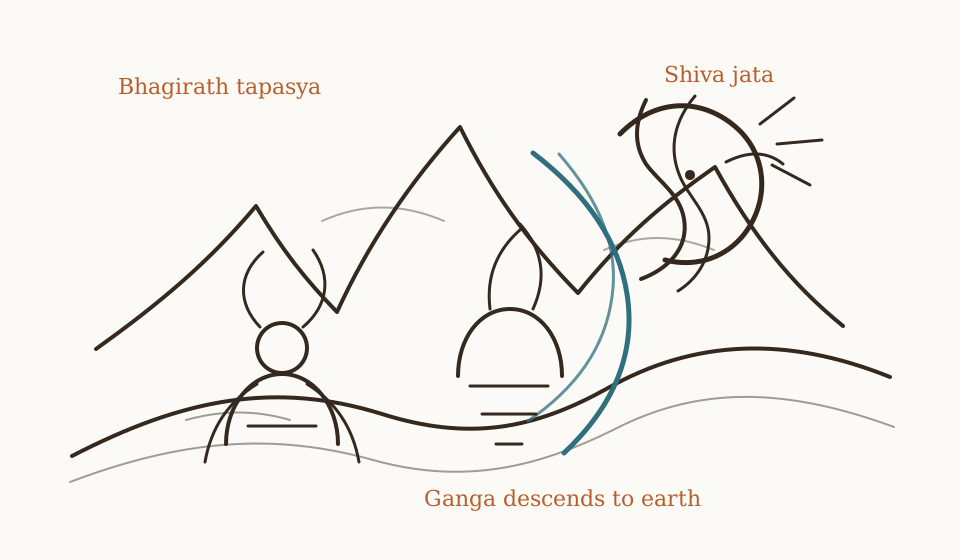
For generations, descendants of Sagara attempted to bring Ganga to earth to liberate these souls. Finally, Prince Bhagiratha succeeded where all others had not. He performed tapasya of such extraordinary intensity — standing on one foot, arms raised, for years — that Lord Brahma appeared before him.
Bhagiratha asked: bring Ganga from the heavens to earth.
Brahma consented — but explained the problem. Ganga's descent from the three worlds carried such force that if she fell directly to earth, the impact would split the ground open. Only one being could absorb that force: Lord Shiva.
So Bhagiratha performed a second round of austerities directed at Shiva. Shiva agreed to catch Ganga in his matted locks — his jata — and release her gently to earth.
Ganga descended. Shiva caught her in his locks — and then, playfully, held her there until Bhagiratha performed yet more penance. Only then did Shiva part a single stream from his hair, releasing Ganga to the mortal world.
That stream is the river we call the Ganga. Because Bhagiratha led her here, she is called Bhagirathi. Because sage Jahnu swallowed her briefly in annoyance and released her from his ear, she is called Jahnavi. The ashes of Sagara's 60,000 sons were blessed; their souls found moksha.
On Jyeshtha Shukla Dashami this descent is commemorated. Every year on this tithi, the river's liberating power is at its most potent — and bathing in her is an act of profound consequence.
10 Benefits of Ganga Dussehra — What the Scriptures Say
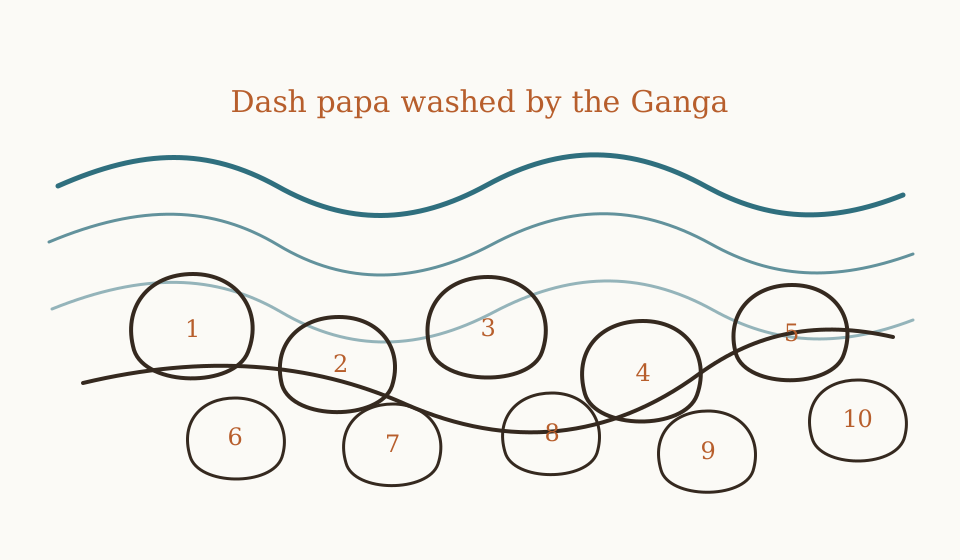
The Skanda Purana is explicit about what Ganga Dussehra removes: ten categories of sin across the three instruments of human action — body, mind, and speech.
Three Sins of the Body (Kaya):
- Himsa — causing harm or violence to living beings
- Steya — theft or dishonest acquisition of what belongs to another
- Paradara — transgression of another's intimate relationship
Four Sins of the Mind (Mana): 4. Abhidha — coveting what belongs to another 5. Droha — harbouring hatred or ill-will 6. Asatya-abhisandha — mentally planning deception 7. Spriha — intense craving for what one does not need or deserve
Three Sins of Speech (Vacha): 8. Parusha — harsh, wounding, or cruel speech 9. Anrita — untruth and falsehood 10. Paisunya — slander, gossip, and speech that harms another's reputation
In the Vedic view, karma is accumulated through action, thought, and word. The Ganga on Ganga Dussehra offers a moment of grace — an opportunity to begin again.
Beyond the spiritual, the Ganga carries unique bacteriophages — viruses that attack harmful bacteria — not present in other rivers. The cold mountain water at Haridwar's ghats stimulates circulation, and the act of cold-water immersion at dawn is what contemporary wellness culture has recently rediscovered as cold exposure therapy. Your ancestors were doing it for free, on the most beautiful river in the subcontinent, for three thousand years.
Why Haridwar Is the Most Sacred Place for Ganga Dussehra
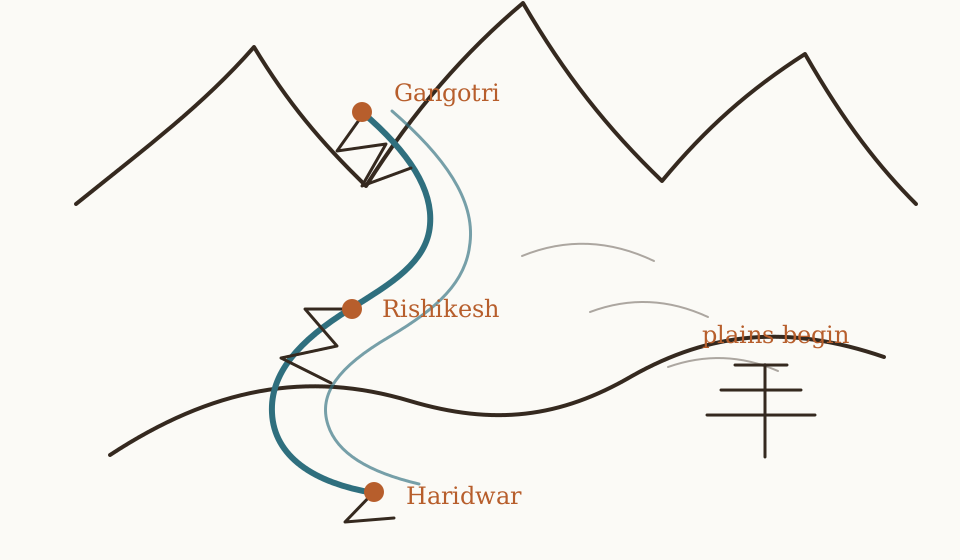
The name Haridwar comes from two possible Sanskritic roots: Hari (Vishnu) + dvara (gateway), or Hara (Shiva) + dvara. Both names capture the same geographic reality: Haridwar is where the Ganga officially leaves the mountains and enters the Gangetic plain. After descending through Gangotri, flowing through Uttarkashi, filling the Tehri reservoir, and rushing through Rishikesh — the river opens up here. The land flattens. The current slows. The Ganga becomes accessible in a way she is not in the narrow gorges above.
This transition point — mountain river meeting the plains — has been considered sacred since the Vedic period. The Mahabharata specifically names Haridwar as a place of highest spiritual potency.
The specific significance for Ganga Dussehra: the Bhagavata Purana identifies Haridwar as the point where Ganga first touched the mortal world on her descent. If the entire Ganga is sacred, Haridwar is the origin point of that sacred terrestrial journey. Bathing here on Ganga Dussehra is not just bathing in the sacred river on a sacred day — it is bathing at the genesis of the river's earthly existence, on the day that genesis is commemorated.
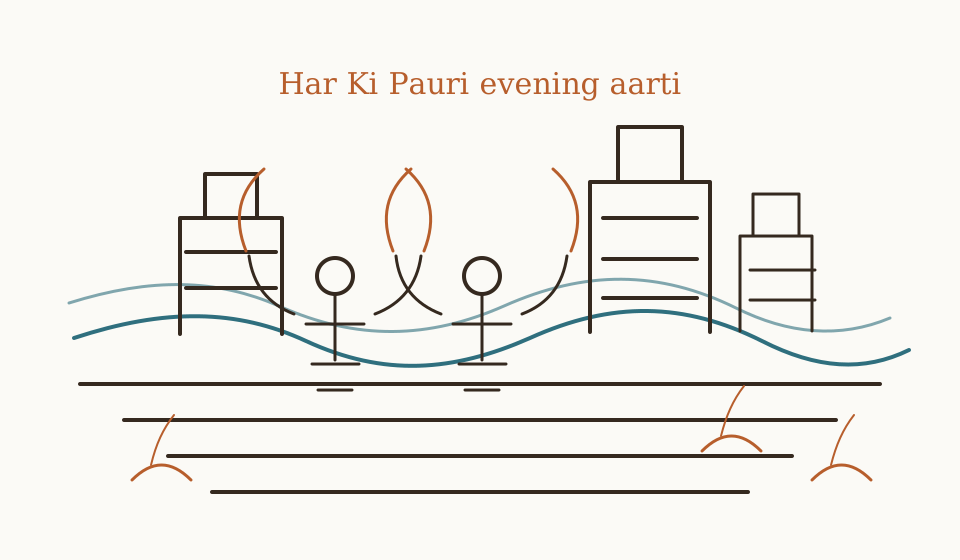
Har Ki Pauri is the holiest ghat within Haridwar — the name means footsteps of God, specifically the place where Vishnu's footprint is said to be embedded in stone. Built by King Vikramaditya in memory of his brother Bhartrihari, this ghat is where the famous Ganga Aarti takes place every evening. On Ganga Dussehra, the aarti here becomes a spectacle of a different magnitude entirely — hundreds of priests, hundreds of earthen diyas floating on the dark river, thousands of pilgrims standing in the water.
The Ten Sacred Ghats of Haridwar
- Har Ki Pauri — Most sacred; Vishnu's footprint; central Ganga Aarti site
- Brahmakund — The holiest spot within Har Ki Pauri; Kumbh Mela site
- Kushavarta Ghat — Where Bhagiratha first offered water to his ancestors' ashes
- Mansa Devi Ghat — Below the famous Mansa Devi temple
- Sureshwari Ghat — Quieter; favoured by serious sadhaks
- Vishnu Ghat — Ancient, calm; excellent alternative when Har Ki Pauri is at capacity
- Neel Dhara Ghat — Known for the natural filtration currents of the Ganga
- Birla Ghat — Built by the Birla family; clean, accessible for all pilgrims
- Sati Kund — Deeply Shaiva; linked to the story of Devi Sati's sacrifice
- Saptrishi Ashram Ghat — Where the seven rishis meditated; tranquil, rarely crowded
Ganga's Sacred Journey — Gangotri to Haridwar
Ganga Dussehra 2026 — Date, Muhurta & What to Expect
Ganga Dussehra 2026 falls on Jyeshtha Shukla Dashami — verify the precise date and auspicious timings in your Panchang, as lunar dates shift annually. The festival typically arrives in late May or early June.
The most auspicious snan muhurta is the Brahma Muhurta: 4:00 to 6:00 AM. The Abhijit Muhurta around solar noon is the second recommended window. The evening period before the Ganga Aarti at sunset is the third.
What to expect at Haridwar on Ganga Dussehra:
- 5 to 10 lakh pilgrims — arrive the evening before to avoid the morning rush
- Extended morning Ganga Aarti from approximately 5:30 AM, more elaborate than the daily ritual
- Priests at every major ghat performing Dussehra-specific pujas
- All road approaches to Haridwar — from Roorkee, Muzaffarnagar, and Dehradun — will be heavily congested from the night before
- Hotels and dharamshalas book out 3 to 4 weeks in advance; do not leave this to the last minute
A Full Day Plan for Ganga Dussehra in Haridwar
3:30 AM — Rise. The crowd at Har Ki Pauri builds steadily from 4 AM; the atmosphere before dawn — devotional songs from loudspeakers, incense, the river sound in the dark — is itself worth the early start.
4:00 to 5:30 AM — Take the holy dip. If Har Ki Pauri feels overcrowded, Vishnu Ghat and Birla Ghat are equally valid alternatives with the same sacred Ganga water. Offer Gangajal back to the river. If you know the Ganga Stuti from Skanda Purana, this is the time.
5:30 to 6:30 AM — Attend the extended morning Ganga Aarti at Har Ki Pauri. On Ganga Dussehra this is significantly more elaborate than the daily ritual.
7:00 to 8:00 AM — Breakfast. We'll address what and where specifically in the next section.
9:00 AM to 12:00 PM — Visit Daksha Mahadev Temple (one of Haridwar's oldest, connected to Sati's story), Mansa Devi Temple (ropeway or trek), and Chandi Devi Temple.
12:00 to 2:00 PM — Rest and lunch. Haridwar is a fully vegetarian city; thali options throughout Bara Bazar are genuinely good.
4:00 PM — Explore Bara Bazar for authentic Haridwar items — Gangajal containers, Rudraksha malas, and the full range of products from the best sweet shop in Haridwar.
6:00 PM — Second snan if desired, followed by the spectacular evening Ganga Aarti: hundreds of priests, hundreds of earthen diyas on the dark river, thousands of pilgrims from across India and the world.
After the Snan — Why Choose Vrindavan Aushadhiya Misthan
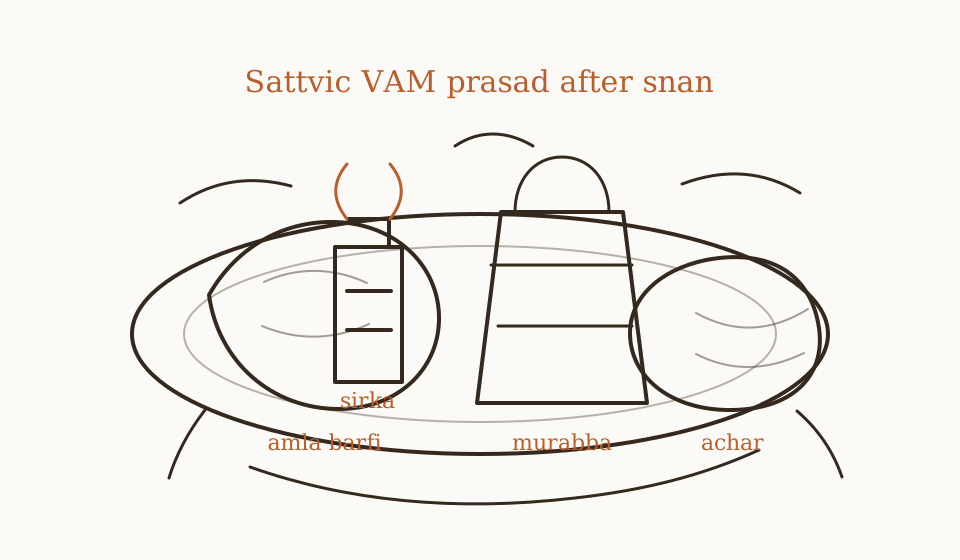
Here is something no travel guide will tell you: the hours after the Ganga Dussehra snan deserve specific attention.
You have immersed yourself in cold river water at dawn, possibly fasted, and expended significant physical and spiritual energy. Your body at this point has heightened agni — digestive fire. In Ayurvedic terms, cold water immersion stokes Jatharagni (metabolic fire) and creates a state of heightened receptivity. What you eat now is absorbed with unusual efficiency.
This is not the time for a deep-fried puri or a Gulab Jamun swimming in refined-sugar syrup. The body that has just been purified deserves something sattvic — pure, light, energising, and honest about its ingredients.
Vrindavan Aushadhiya Misthan — the best sweet shop in Haridwar for Ayurvedic and herbal confectionery — was built exactly for this. Not a tourist sweet shop. An actual Ayurvedic confectionery where every product begins with a whole fruit or herb, and the ingredient list contains nothing you need to look up.
The Flavour Map of VAM — A Ganga Dussehra Tasting Guide
The Sweet World — Mithai
Amla Barfi is our flagship. Made from fresh Indian gooseberry with no artificial colour, flavour, or preservative, you can see the actual fruit fibre in each piece. Tart, sweet, faintly chewy — Vitamin C in a barfi. Available in sugar and jaggery variants; on Ganga Dussehra, the jaggery variant is the sattvic choice.
Bael Barfi surprises first-timers most. Bael — Aegle marmelos, the sacred Bilva fruit offered to Lord Shiva — has a distinctive woody, slightly floral taste. Since Ganga Dussehra is deeply connected to Shiva (who caught Ganga in his locks), the Bael Barfi carries a specific resonance as prasad for this particular festival. Bael is also one of Ayurveda's great gut healers: chronic digestive conditions, IBS, and constipation are traditional domains for this fruit.
Explore Bael Barfi — the most appropriate prasad for Ganga Dussehra.
Guava Barfi (Amrood Barfi) — fresh guava pulp, slow-cooked until firm. The flecks of guava skin prove it is real fruit. Rich, slightly grainy, with a brightness that cuts through the sweetness. You genuinely cannot find this at any other sweet shop in Haridwar.
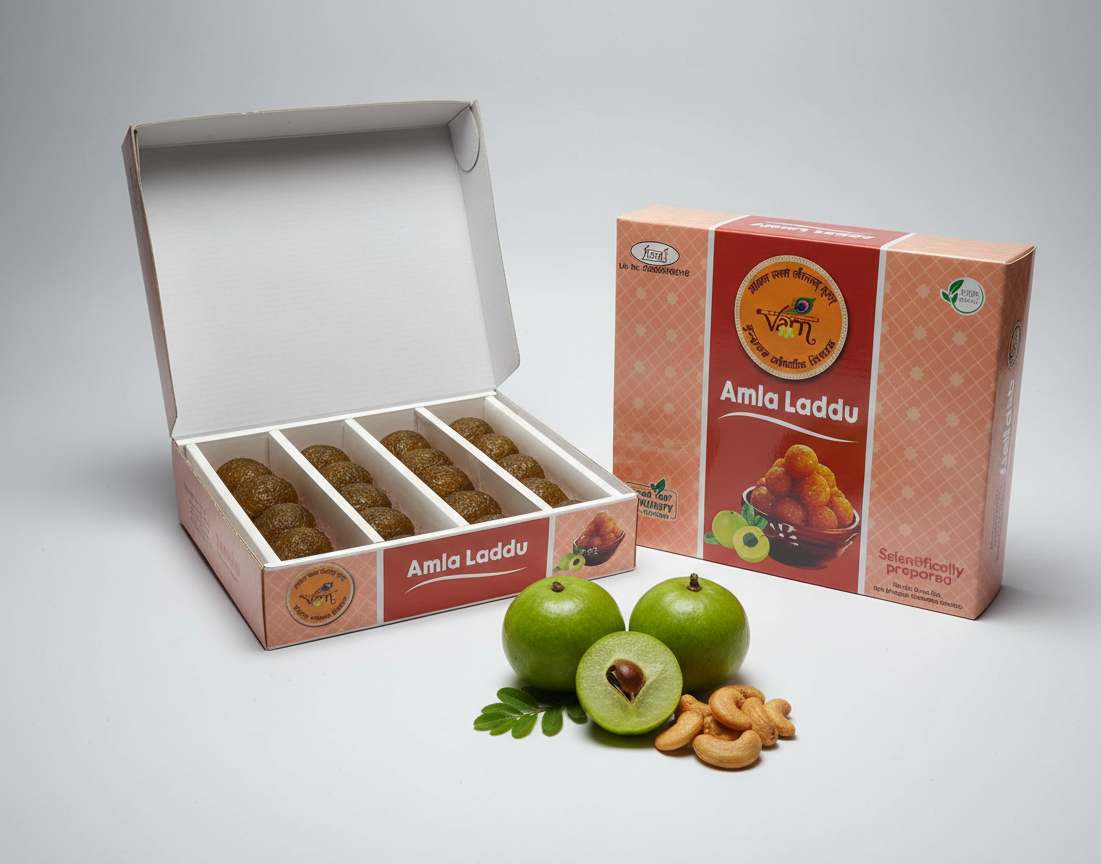
Amla Ladoo — round, dense, fudge-like. Made with amla, desiccated coconut, and jaggery. An excellent breakfast sweet for pilgrims who need sustained energy without a heavy meal.
Amla Chatpati Candy — the one that makes everyone stop mid-bite. Sour, sweet, salty, a little spicy. Children and adults both tend to reach for a second piece before the first is finished.
Amla Methi Candy — for those who know Ayurveda: amla and fenugreek combined. Pleasantly bitter, stimulates bile production, settles digestion. After a full Haridwar thali lunch, these are what to have.
Find the complete sweet range on the Bhandar page.
Preserved Fruit Confections — Murabba
Murabba is not a jam and not a candy. It is whole or large-cut fruit preserved in syrup until translucent — a distinctly Indian tradition recommended in Ayurvedic texts on food.
Cheeni Murabba — classic, amber-gold, excellent for gifting as Ganga Dussehra prasad for family who could not make the trip.
Gud Murabba — the Ayurvedic choice. Jaggery adds a depth of flavour refined sugar cannot replicate. Charaka Samhita recommends this preparation for building immunity and strengthening ojas (vital energy). Our top recommendation for prasad to carry home.
Explore Cheeni Murabba and Gud Murabba.
The Tangy World — Achaar (Pickles)
Haridwar is a pilgrimage city but it is also a living town with a full food culture, and achaar is as central to North Indian kitchens as mithai. Our pickle range covers the breadth of traditional Uttarakhand preservation.
Amla Pickle (Amla Achaar) — amla in cold-pressed mustard oil with black mustard seeds, fenugreek, turmeric, and salt. Sharply sour, intensely flavoured. A tablespoon with a hot roti after your Ganga Dussehra snan will bring you fully back to the physical world after the transcendence of the morning. See Amla Pickle.
Mango Pickle (Aam Achaar) — traditional Haridwari style: generous mustard oil, confident spice. Raw mango pieces, cold-pressed mustard oil, panch-phoron, long maturation. Complex and satisfying. See Mango Pickle.
Mixed Pickle — carrot, turnip, cauliflower, raw mango, and amla together. Each vegetable absorbs its neighbours' flavours while remaining distinct. See Mixed Pickle.
Lemon Pickle (Nimbu Achaar) — sharp, cleansing, ideal for the digestive system after a day of fasting and ceremony.
Lemon Khatta Meetha — sweet-tangy lemon pickle, warmly spiced. Unusual and genuinely addictive.
Mango Khatai — dried raw mango with spices. Intensely sour, used as digestive, snack, and dal flavouring.
And more: Green Chilli Pickle, Red Chilli Pickle, Garlic Pickle, Ginger Pickle, Carrot Pickle, Jimikand Pickle, and Kathal (Jackfruit) Pickle. The full range of the Uttarakhand achaar tradition.
The Fermented Dimension — Sirka (Vinegar)
Ganna Sirka (sugarcane vinegar) is something Haridwar's old families have made for generations. Fermented naturally from sugarcane juice, it has a complexity commercial acetic acid vinegars lack — slightly sweet, faintly floral, acidic the way a good wine is acidic.
Jamun Sirka (Black Plum Vinegar) is our most unusual product. Jamun (Syzygium cumini) has a long Ayurvedic tradition as a support for blood glucose regulation. The Jamun Sirka preserves some of these properties in a dark, intensely-flavoured vinegar genuinely unlike anything in a supermarket. Take a bottle home from Ganga Dussehra and you will use it for months.
Chutney and Churan
Amla Chutney — freshly-ground amla with green chilli, ginger, and digestive spices. Bright, acidic, alive.
Amla Churan — dried amla powder with digestive spices. The traditional post-meal digestive from Ayurvedic households for generations. After a heavy festival meal, this is what to reach for.
Why VAM Is the Right Choice for Ganga Dussehra Prasad and Gifting
When you visit Haridwar for Ganga Dussehra, you will see dozens of shops selling identical boxed assortments of kaju katli and soan papdi made in factories elsewhere. There is nothing wrong with those sweets — but they have nothing specific to say to someone who has just completed a sacred ritual on the banks of the Ganga.
Our products are different in the ways that matter:
They are sattvic. Real fruit, minimal processing, no artificial additives. When your body is in an elevated state after the Ganga snan, what you put into it matters more than usual.
They travel well. Pickles, murabba, and candy are preserved products — they survive the journey home and arrive as authentic to your family as they were at the ghat.
They are genuinely from Haridwar. Bael Barfi, Amla Murabba, Jamun Sirka — these are not available at a supermarket anywhere in India. When you give them as prasad, you are giving a piece of Haridwar itself.
Browse the full range on our Bhandar page | Find our three store locations | Open 8 AM to 9 PM daily
How to Reach Haridwar for Ganga Dussehra 2026
By Train: Haridwar Junction (HW) connects to Delhi, Dehradun, Lucknow, and beyond. From Delhi, the Jan Shatabdi Express reaches Haridwar in 4 to 5 hours. Book 4 to 6 weeks in advance; trains fill fast around Ganga Dussehra in Haridwar.
By Road: Delhi to Haridwar is 220 km via NH-334. Under normal conditions: 4.5 hours by car. On Ganga Dussehra day: plan for 7+ hours. Arrive the evening before. All approach roads will be congested from the night before the festival.
By Bus: Regular UPSRTC and UTTC buses from Delhi (ISBT Kashmere Gate), Dehradun, Rishikesh, and Roorkee. Overnight buses the previous evening are the most comfortable option.
By Air: Jolly Grant Airport, Dehradun — approximately 55 km from Haridwar, 1.5 hours by taxi under normal conditions.
Pilgrim's Packing List for Ganga Dussehra in Haridwar
- Change of clothes (you will get thoroughly wet at the ghat)
- Waterproof pouch for phone and wallet at the ghat
- Warm layer for pre-dawn hours — late May / early June at 4 AM by the river is cool
- Copper or steel container for Gangajal (available at ghats, but bringing your own is better)
- Small cloth bag for flowers and diyas
- Cash — many ghat vendors and small shops prefer cash
- Pre-booked accommodation — Haridwar hotels fill completely 2 to 3 weeks before Ganga Dussehra
FAQ: 6 Questions About Ganga Dussehra
Q1. What makes Ganga Dussehra different from Ganga Jayanti?
Ganga Jayanti (Vaishakha Shukla Saptami) marks the day Ganga descended from Brahma's realm to Shiva's locks — the start of her journey. Ganga Dussehra marks the day she reached the mortal world. Ganga Dussehra is the more widely observed festival and the one specifically associated with the removal of the ten sins.
Q2. Is bathing at Haridwar specifically required, or will any Ganga ghat do?
Any point on the Ganga on Ganga Dussehra carries merit. However, Haridwar is traditionally identified as the first place Ganga touched the plains, giving the Ganga Dussehra Haridwar celebration specific significance. Har Ki Pauri and Brahmakund within it are the most powerful spots.
Q3. What are the auspicious times for the snan on Ganga Dussehra?
The Brahma Muhurta (4:00 to 6:00 AM) is the most auspicious window. The Abhijit Muhurta around solar noon is the second recommended time. The evening before the Ganga Aarti is the third.
Q4. Which mantras or offerings are traditional for Ganga Dussehra?
The Ganga Stuti from Skanda Purana is the primary hymn. Traditional offerings include white flowers, sesame seeds, and a lit earthen lamp offered while facing east at sunrise. Your family pandit can guide the specific vidhi.
Q5. What should I eat after the Ganga Dussehra snan?
Ayurveda recommends sattvic food after cold water immersion — light, pure, nourishing. Avoid heavy fried food immediately after the snan. Amla-based products (Amla Barfi, Amla Ladoo, Amla Murabba), fresh fruit, and warm foods are most appropriate. Our Bhandar has several products well-suited to this moment.
Q6. Where should I buy prasad and gifts from Haridwar on Ganga Dussehra?
Buy from shops that actually make things in Haridwar. For sattvic, Ayurvedic, and genuinely Haridwar-specific products — Vrindavan Aushadhiya Misthan, the best sweet shop in Haridwar for herbal confectionery. Our Bhandar has the full range; contact us for locations open from 8 AM to 9 PM.
In Closing
Ganga Dussehra is not an event to attend. It is a relationship to enter into.
The Ganga has been here longer than Haridwar has had its name, longer than the temples on its banks, longer than the Sanskrit texts that describe her. On Jyeshtha Shukla Dashami each year, millions of people orient themselves toward this river — physically or in prayer — and remember that they are connected to something ancient, living, and generous.
If you come to Haridwar for Ganga Dussehra 2026, come prepared to be moved. Come prepared for the cold river at dawn, the conch shells in the dark, the sound of thousands of people speaking the same words at the same moment. Come prepared for the extraordinary experience of standing in a crowd where every single person is there for the same reason: to touch something that transcends the ordinary.
And when you have taken your snan and completed your prayers — come find us. The sattvic, the tangy, the sweet, the sour, the fermented, the preserved — the complete flavour map of Haridwar — will be waiting.
Har Har Gange.
Also explore: 10 Places to Visit in Haridwar | Kumbh Mela 2027 Complete Guide | Why VAM Stands Out | Full Product Range
गंगा दशहरा 2026 हरिद्वार — सम्पूर्ण तीर्थयात्री गाइड
वृंदावन औषधीय मिष्ठान टीम द्वारा
हरिद्वार में कुछ ऐसी सुबहें होती हैं जब कोहरा अभी छँटा नहीं होता, गंगा जल हल्के हरे रंग में बहता है, और हर की पौड़ी की शंख-ध्वनि पूरे शहर में गूँजती है। साधारण दिनों में भी यह असाधारण है। गंगा दशहरा के दिन यहाँ जो होता है — वह जीवन में एक बार अवश्य देखना चाहिए।
गंगा दशहरा क्या है?
गंगा दशहरा ज्येष्ठ शुक्ल दशमी को मनाया जाता है — ज्येष्ठ माह (मई-जून) की शुक्ल पक्ष की दसवीं तिथि। 2026 में यह मई के अंत या जून के प्रारंभ में पड़ेगा।
"दशहरा" का अर्थ है — दश (दस) + हर (हरण करना) — दस पापों का नाश। यह वह पवित्र दिन है जब माँ गंगा स्वर्ग से धरती पर अवतरित हुई थीं।
स्कंद पुराण के गंगा दशहरा माहात्म्य में कहा गया है:
"दशमी शुक्ल पक्षस्य ज्येष्ठमासे महात्मने, दशपापहरंतीति गंगादुस्सरमिरितम्"
ज्येष्ठ माह की शुक्ल दशमी को यह महान पर्व दस पापों का हरण करता है — इसीलिए इसे गंगा दशहरा कहते हैं।
भागीरथी की पौराणिक कथा
राजा सगर के 60,000 पुत्र कपिल मुनि के क्रोध से भस्म हो गए थे। उनकी मुक्ति के लिए उनके वंशज भागीरथ ने वर्षों तक कठोर तपस्या की। एक पैर पर खड़े होकर, भुजाएँ उठाए — इस तरह उन्होंने तप किया।
ब्रह्मा जी ने वरदान दिया कि गंगा धरती पर आएगी। किंतु उनके अतुल वेग को सहन करने के लिए शिवजी की आवश्यकता थी। भागीरथ ने शिवजी की फिर आराधना की। प्रसन्न होकर शिवजी ने गंगा को अपनी जटाओं में धारण किया, और फिर एक पतली धारा के रूप में उन्हें धरती पर उतारा।
गंगा धरती पर आईं। भागीरथ के पूर्वजों की अस्थियाँ पावन हुईं, उनकी आत्माओं को मोक्ष मिला।
इसीलिए गंगा को भागीरथी कहते हैं — भागीरथ की कठोर तपस्या से प्राप्त। और जाह्नवी भी — जह्नु ऋषि ने उन्हें क्षणिक रूप से पी लिया था, फिर कान से निकाला।
दश-पाप — दस पापों का नाश
काया (शरीर) के 3 पाप:
- हिंसा — जीवों को कष्ट देना
- स्तेय — चोरी और छल से लिया हुआ
- परदार — दूसरे के दाम्पत्य में हस्तक्षेप
मन के 4 पाप: 4. अभिध्या — दूसरे की वस्तु का लालच 5. द्रोह — मन में द्वेष रखना 6. मिथ्याभिसंधि — मन में छल की योजना 7. स्पृहा — अनुचित और अत्यधिक इच्छाएँ
वाचा (वाणी) के 3 पाप: 8. परुष — कठोर और दुखदायी वचन 9. अनृत — असत्य बोलना 10. पैशुन्य — चुगली और बदनामी
इन दसों पापों का नाश ज्येष्ठ शुक्ल दशमी को गंगा स्नान से होता है। यही गंगा दशहरा का आध्यात्मिक सार है।
हरिद्वार — गंगा दशहरा का सर्वाधिक पवित्र स्थान
हरिद्वार वह स्थान है जहाँ गंगा पर्वतों से उतरकर मैदानी भाग में प्रवेश करती है। "हरिद्वार" का अर्थ है — हरि (विष्णु) का द्वार। भागवत पुराण में हरिद्वार को वह स्थान बताया गया है जहाँ गंगा ने पहली बार धरती का स्पर्श किया।
हर की पौड़ी — हरिद्वार का सर्वाधिक पवित्र घाट। नाम का अर्थ है "भगवान के चरण चिह्न।" यहाँ प्रतिदिन की गंगा आरती होती है, और गंगा दशहरा पर यह आरती अत्यंत भव्य और विस्तृत होती है।
हरिद्वार के प्रमुख घाट:
- हर की पौड़ी — सर्वाधिक पवित्र
- ब्रह्मकुण्ड — हर की पौड़ी के भीतर सबसे पवित्र स्थल
- कुशावर्त घाट — जहाँ भागीरथ ने पूर्वजों को जल अर्पित किया
- विष्णु घाट — प्राचीन और शांत; भीड़ कम हो तो उत्तम विकल्प
- बिरला घाट — स्वच्छ और सुलभ
गंगा दशहरा 2026 — तिथि, मुहूर्त और अपेक्षाएँ
गंगा दशहरा 2026 में ज्येष्ठ शुक्ल दशमी को पड़ेगा — सटीक तिथि और मुहूर्त के लिए अपना पंचांग देखें। यह पर्व प्रायः मई के अंत या जून के प्रारंभ में आता है।
सर्वश्रेष्ठ स्नान मुहूर्त: ब्रह्म मुहूर्त — प्रातः 4 से 6 बजे। अभिजित मुहूर्त (दोपहर) और सूर्यास्त का समय भी शुभ हैं।
हरिद्वार में क्या अपेक्षा करें:
- 5 से 10 लाख श्रद्धालु
- विस्तारित प्रातःकालीन गंगा आरती
- हर प्रमुख घाट पर विशेष दशहरा पूजा
- हरिद्वार की सभी सड़कें उत्सव के एक दिन पहले से जाम
गंगा दशहरा पर हरिद्वार में पूरे दिन की योजना
रात 3:30 बजे — उठें। हर की पौड़ी पर सुबह 4 बजे से भीड़ बढ़ने लगती है।
4–5:30 बजे — पवित्र गंगा स्नान। ब्रह्म मुहूर्त में। गंगाजल गंगा को वापस अर्पित करें। गंगा स्तुति का पाठ करें।
5:30–6:30 बजे — विस्तारित गंगा आरती। गंगा दशहरा पर यह विशेष रूप से भव्य होती है।
7–8 बजे — जलपान। इस बारे में अगले खंड में विस्तार से।
9 बजे–दोपहर — दक्ष महादेव मंदिर, मनसा देवी मंदिर (रोपवे), चंडी देवी मंदिर।
दोपहर 12–2 बजे — भोजन और विश्राम। हरिद्वार पूर्णतः शाकाहारी शहर है।
शाम 4 बजे — बड़ा बाज़ार में घूमें — गंगाजल पात्र, रुद्राक्ष माला, और हरिद्वार की सर्वश्रेष्ठ मिठाई दुकान वृंदावन औषधीय मिष्ठान।
शाम 6 बजे — सूर्यास्त के समय भव्य गंगा आरती — सैकड़ों दीये नदी पर तैरते हुए।
वृंदावन औषधीय मिष्ठान — गंगा दशहरा का सात्विक प्रसाद
स्नान के बाद शरीर को सात्विक और पौष्टिक आहार चाहिए। आयुर्वेद कहता है कि शीतल जल में स्नान के बाद जठराग्नि प्रदीप्त होती है — यह वह समय है जब भोजन का सर्वोत्तम अवशोषण होता है।
वृंदावन औषधीय मिष्ठान — हरिद्वार की सर्वश्रेष्ठ मिठाई दुकान — एक आयुर्वेदिक मिठाई भंडार है। यहाँ हर उत्पाद असली फल या जड़ी-बूटी से बनता है, बिना कृत्रिम रंग, स्वाद या परिरक्षक के।
मिठाइयाँ:
आँवला बर्फी — हमारा प्रमुख उत्पाद। असली आँवले से बनी, हर टुकड़े में फल के रेशे दिखते हैं। खट्टी, मीठी, चबाने वाली — एक बर्फी में पूरे आँवले का विटामिन C। चीनी और गुड़ दोनों में उपलब्ध।
बेल बर्फी — भगवान शिव के प्रिय बिल्व फल से बनी। गंगा दशहरा — जो शिव जी के गंगा को जटाओं में धारण करने से जुड़ा है — के लिए यह सर्वाधिक उपयुक्त प्रसाद है। बेल बर्फी देखें
अमरूद बर्फी — असली अमरूद के गूदे से। हरिद्वार में केवल हमारे यहाँ।
आँवला लड्डू — आँवला, नारियल और गुड़ से बना। तीर्थयात्रियों के लिए आदर्श।
आँवला चटपटी कैंडी — खट्टी-मीठी-नमकीन-तीखी। एक के बाद एक।
मुरब्बे:
चीनी मुरब्बा — पारंपरिक, उपहार के लिए उत्तम। देखें
गुड़ मुरब्बा — आयुर्वेदिक श्रेष्ठ विकल्प; चरक संहिता में अनुशंसित। प्रसाद के रूप में सर्वश्रेष्ठ। देखें
अचार की विविधता:
आँवला अचार | मैंगो अचार | मिक्स अचार | नींबू अचार | नींबू खट्टा-मीठा | हरी मिर्च अचार | लहसुन अचार | गाजर अचार | अदरक अचार | जिमीकंद अचार | कटहल अचार
सिरका:
गन्ना सिरका — प्राकृतिक रूप से किण्वित गन्ने के रस से; अनूठा स्वाद।
जामुन सिरका — आयुर्वेद में रक्त शर्करा नियंत्रण के लिए जामुन की परंपरा। एक अद्वितीय उत्पाद।
आँवला चटनी और आँवला चूर्ण — भोजन के बाद पाचन के लिए।
सम्पूर्ण उत्पाद श्रृंखला: भंडार | स्टोर की जानकारी: संपर्क
हरिद्वार कैसे पहुँचें
ट्रेन: हरिद्वार जंक्शन (HW) — दिल्ली से जन शताब्दी या देहरादून शताब्दी से 4-5 घंटे। 4-6 सप्ताह पहले बुकिंग करें।
सड़क: दिल्ली से 220 किमी (NH-334)। सामान्य दिन: 4.5 घंटे। गंगा दशहरा पर: 7+ घंटे। एक रात पहले पहुँचें।
बस: UPSRTC/UTTC — दिल्ली (ISBT कश्मीरी गेट), देहरादून, ऋषिकेश से।
अक्सर पूछे जाने वाले प्रश्न
प्र. गंगा दशहरा और गंगा जयंती में क्या अंतर है? गंगा जयंती (वैशाख शुक्ल सप्तमी) पर गंगा ब्रह्मा के कमंडल से शिव की जटाओं में आईं। गंगा दशहरा पर वे धरती पर पहुँचीं। गंगा दशहरा दस पापों के नाश से विशेष रूप से जुड़ा है।
प्र. स्नान के बाद क्या खाना चाहिए? आयुर्वेद के अनुसार शीतल जल स्नान के बाद सात्विक, हल्का और पौष्टिक भोजन। आँवला बर्फी, आँवला लड्डू, आँवला मुरब्बा — ये सभी उत्तम विकल्प हैं। हमारा भंडार देखें।
प्र. हरिद्वार से प्रसाद और उपहार कहाँ से लें? ऐसी दुकानों से जो हरिद्वार में वास्तव में बनाती हों। सात्विक और आयुर्वेदिक उत्पादों के लिए — वृंदावन औषधीय मिष्ठान, हरिद्वार की सर्वश्रेष्ठ औषधीय मिठाई दुकान। भंडार | संपर्क | सुबह 8 – रात 9
हर हर गंगे।
हरिद्वार में 10 दर्शनीय स्थल | कुंभ मेला 2027 गाइड | वृंदावन औषधीय मिष्ठान क्यों सबसे अलग है | भंडार
वृंदावन औषधीय मिष्ठान — हरिद्वार की सर्वश्रेष्ठ मिठाई दुकान ज्वालापुर D-10 | B-13, BHEL | नवोदय नगर | सुबह 8 – रात 9 | WhatsApp: +91-7705072989
Vrindavan Aushadhiya Misthan — 3 Locations, Haridwar
W3QF+4M Haridwar, Uttarakhand
Visit the Best Sweets Shop in Haridwar
Vrindavan Aushadhiya Misthan — 3 Store Locations · WhatsApp Delivery Available